A restaurant can look spotless to diners while still carrying expensive cleaning risks in the kitchen, restrooms, floors, drains, and waste areas. The usual problem is not that an operator forgets to hire a cleaner. It is that the contract is too vague to cover what the restaurant actually needs.
Use this checklist before requesting proposals for commercial cleaning services for your restaurant. It will help you define the work, screen providers, compare quotes fairly, and set standards that hold up after the first month.
Quick-start checklist:
- Write the scope: List every area, task, frequency, service window, and supply responsibility.
- Separate specialist work: Confirm what routine cleaning excludes, including technical or compliance-related services.
- Compare like for like: Give each provider the same written scope and review exclusions, qualifications, and quality controls.
- Set the follow-through: Attach the scope to the contract and schedule an early quality review.
Start With the Restaurant Cleaning Scope You Actually Need
Before contacting providers, separate cleaning into four categories. This prevents a common and costly assumption: that a nightly janitorial visit automatically includes deep kitchen cleaning, grease-related work, or every sanitation task your operation requires.
- Daily staff cleaning: Assign shift-level work such as wiping tables, clearing spills, emptying small bins, spot-cleaning restrooms, and resetting guest areas. Employees handle these tasks during service because they require immediate attention.
- Recurring janitorial service: Define the cleaning work performed on a regular schedule, often after closing or before opening. This may include floors, restrooms, dining areas, offices, waste areas, and routine back-of-house surfaces.
- Periodic deep cleaning: Schedule detailed work for buildup that routine cleaning does not fully address, such as grout, walls, floor edges, high dusting, detailed restroom cleaning, and hard-to-reach areas around equipment.
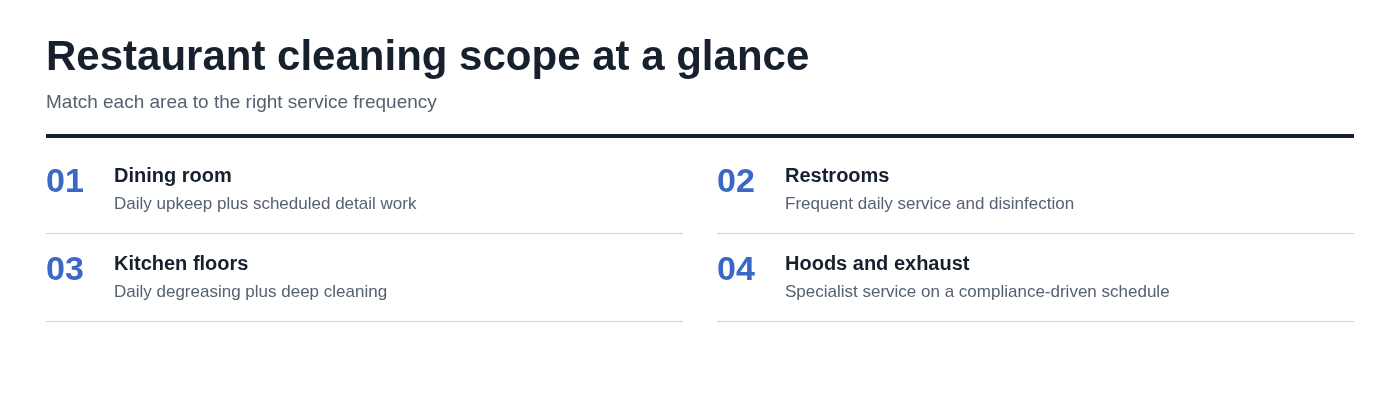
- Specialist work: Treat hoods, grease exhaust, grease traps, equipment interiors, certain drain issues, and other regulated or technical work as separate services unless a qualified provider specifically includes them.
Commercial cleaning services can include dusting, mopping, restroom cleaning, surface disinfection, waste removal, window cleaning, floor care, and detailed kitchen-area cleaning. The exact scope varies by provider, location, service frequency, and contract, so every task should be written down rather than assumed.
Prioritize health-sensitive spaces first: restrooms, food-prep-adjacent areas, dish stations, drains, waste zones, and high-touch surfaces. Then protect customer-facing spaces such as entryways, dining rooms, host stands, bars, glass, and floors. A cleaning plan that ignores either side of the restaurant creates avoidable operational problems.
1. Define the Areas and Tasks in Writing
A usable scope of work names rooms, surfaces, tasks, frequency, and timing. "Clean the restaurant" is not a scope. It is an invitation for disagreement when something important is missed.
- List every service area: Include entryways, dining rooms, host areas, bars, restrooms, kitchen floors, dish areas, storage rooms, offices, staff areas, waste zones, and applicable exterior touchpoints. A provider cannot price or staff work reliably if important areas are left off the list.
- Describe tasks at surface level: Write "degrease kitchen floor and edges," "wipe dining chair backs," or "clean and restock restroom dispensers" instead of using broad labels such as "clean kitchen." Specific wording makes inspection possible.
- Assign a frequency to every task: Mark whether work is per shift, daily, weekly, monthly, or on demand. Frequency is often the biggest difference between two proposals with similar-looking prices.
- State who supplies consumables: Clarify responsibility for liners, soap, paper products, cleaning chemicals, and dispensers. Do not assume these items are included in a cleaning fee.
Front-of-house checklist
Front-of-house cleaning protects the guest experience and should be planned around service, not performed in ways that disrupt it.
- Clean tables, seating, and guest-contact surfaces: Include table bases, chair backs, booths, condiment areas, host stands, menus where applicable, and high-touch handles. Detail cleaning should reach beyond the visible tabletop.
- Maintain glass, floors, and entryways: Specify interior glass, door handles, mats, floor edges, and spill-prone paths. Entry areas often create the first impression of cleanliness.
- Set restroom standards: Define cleaning, disinfection where required, odor control, fixture cleaning, mirror care, waste removal, and restocking. Restrooms need frequent checks during busy service periods, not only an overnight visit.
- Schedule work around guests: Establish when floors can be mopped, when vacuuming is appropriate, and how wet-floor signage is handled. A clean dining room is not useful if cleaning activity interrupts customers.
Back-of-house checklist
Back-of-house requirements should be more detailed because grease, moisture, food debris, and waste create persistent buildup. Focus the recurring scope on reachable, agreed surfaces and flag specialist work separately.
- Specify floor and drain cleaning: Identify kitchen floor areas, edges, under-counter zones, drains, and dish stations that need routine degreasing. Note recurring problem spots so they receive attention instead of being treated as occasional extras.
- Include reachable equipment exteriors and walls: Define which exterior surfaces, splash zones, shelving, carts, and wall areas are part of the routine service. Be clear about what can be moved and what must remain in place.
- Cover storage, waste, and pest-attracting buildup: Include dry storage exteriors, waste zones, recycling areas, and residue around bins. These areas are easy to overlook and can quickly undermine otherwise good cleaning standards.
- Separate specialist tasks: Equipment internals, hood systems, exhaust systems, and grease traps may require qualified specialist providers. A general janitorial crew should not be presumed to handle work outside its training or authorization.
2. Separate Routine Cleaning From Deep Cleaning and Compliance Work
Restaurant cleaning is easier to manage when tasks are sorted by cadence. This also makes it clear what your recurring commercial kitchen cleaning service does and does not include.
| Frequency | Typical work | What to confirm |
|---|---|---|
| Each shift or daily | Dining room upkeep, restroom checks, floor care, waste removal, high-touch surfaces, routine kitchen floor cleaning | Who performs it, when it occurs, and how missed work is reported |
| Weekly or monthly | Detail work on walls, floor edges, grout, storage areas, fixtures, high dusting, and hard-to-reach surfaces | Exact schedule, labor time, and whether it is included in the recurring price |
| Specialist or inspection-driven | Hoods, grease exhaust, grease traps, equipment interiors, technical drain work, and regulated services | Provider qualifications, local requirements, documentation, and separate pricing |
The key point is simple: general cleaning and compliance-related work are not interchangeable. A basic nightly contract may keep floors and restrooms in order, but it may not cover exhaust cleaning, grease management, or technical maintenance requirements.
Ask each provider to identify exclusions in writing. If the answer is "we clean everything," request a task list. Good providers should be able to describe exactly what their crew will do, how often, and what work requires a different service team. After-hours floor and dining-area cleaning is distinct from separately scoped hood, exhaust, grease-trap, or technical work; requirements vary by location and system, so confirm them with the relevant local authority or qualified professional.
3. Verify Food-Safety Practices and Cleaning Methods
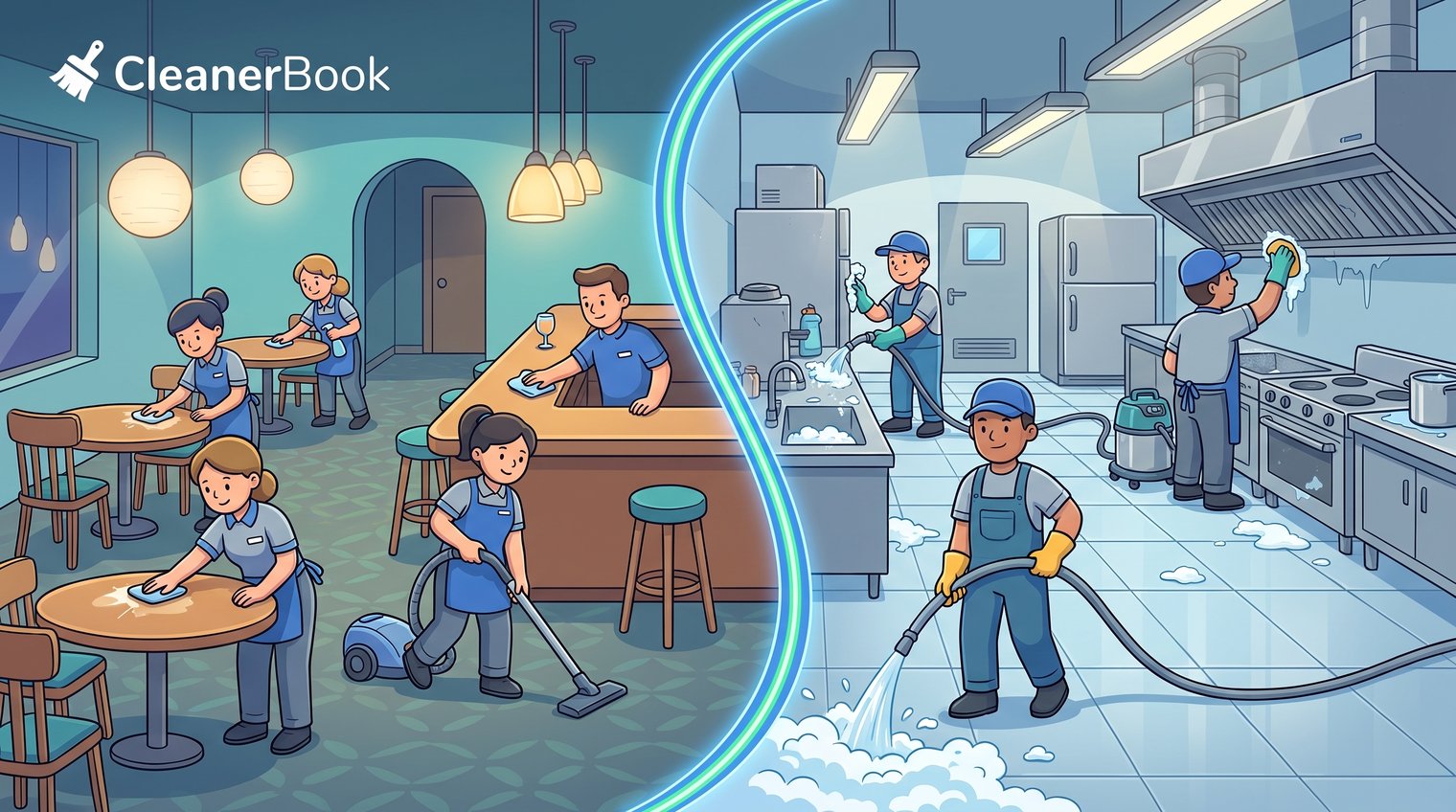
Cleaning methods matter as much as task lists. A crew can complete a room quickly yet create unnecessary risk if tools, chemicals, and work practices are not controlled.
- Ask how the crew prevents cross-contamination: Restrooms, dining areas, and food-prep-adjacent zones should not share the same unmarked tools. Ask whether the provider uses dedicated or color-coded cloths, mops, buckets, and equipment by area.
- Confirm that products fit the surfaces: Floors, stainless steel, food-contact-adjacent surfaces, stone, glass, and upholstered seating may require different methods. Ask how the provider selects products and prevents chemical damage or residue.
- Request chemical handling information when relevant: Products should be labeled, stored safely, and mixed according to stated dilution procedures. Ask for safety data and a clear explanation of who is responsible for chemical storage on site.
- Require documented exceptions: The crew should have a way to report spills, pest evidence, damaged surfaces, supply gaps, blocked drains, or inaccessible areas. Silent omissions are harder to fix than documented issues.
Questions to ask about sanitation controls
Use these questions during a site visit or proposal call. The goal is not to demand a scripted answer; it is to learn whether the provider has practical systems for restaurant work.
- How are tools separated between restrooms, dining areas, and back-of-house spaces? Dedicated equipment reduces the chance that restroom contaminants are carried into other areas.
- How are chemicals labeled, diluted, and stored? Clear procedures protect employees, surfaces, and guests while making responsibilities easier to audit.
- What restaurant-specific training do cleaners receive? Look for an explanation of safe work practices, spill response, floor safety, and escalation of conditions outside the normal scope.
- Who receives reports of issues found during cleaning? Establish whether the shift manager, owner, facilities contact, or another designated person receives updates and how urgent items are escalated.
Consistent cleaning supports a well-run operation, but it does not guarantee a particular health-inspection outcome. What you can control is a documented scope, suitable methods, regular completion checks, and prompt correction when problems appear.
4. Confirm the Provider Can Work Around Restaurant Hours
A provider may have the right capabilities and still be a poor fit if its service window conflicts with prep, deliveries, closing duties, or guest traffic. Restaurant operations are time-sensitive, so access and scheduling need the same attention as cleaning tasks.
- Specify the service window: State whether cleaning occurs after close, before opening, between shifts, or during quieter daytime hours. Include the time by which the restaurant must be ready for staff or guests.
- Document access procedures: Clarify keys, codes, alarm procedures, keyholder contacts, restricted areas, and who opens or locks up. Access confusion is a common source of missed visits and security concerns.
- Address delivery and closing conflicts: Identify periods when deliveries, cash-out, prep, equipment cleaning, or staff closing duties make certain areas inaccessible. The provider needs this information before pricing labor time.
- Ask about staffing continuity: Find out whether the same crew is assigned, how absences are covered, and whether a supervisor checks work. A consistent team usually learns the layout and standards faster.
- Set an urgent-response expectation: Confirm who can respond to post-event cleanup, unexpected spills, or other urgent needs, and whether those visits carry additional charges.
- Require a site walk-through before final pricing: Let the provider see floor materials, kitchen layout, traffic volume, storage constraints, and known problem areas. Remote estimates are often less accurate for restaurant cleaning.
5. Check Insurance, Training, and Local Compliance Fit
Do not treat credentials as paperwork to collect after a problem. Verify essential protections before work begins, particularly when crews work after hours around equipment, chemicals, wet floors, and secured premises.
- Request proof of general liability coverage: Confirm the provider can provide current evidence of coverage appropriate to the work being performed. Keep a copy with your vendor records.
- Confirm workers' compensation coverage: Ask for current proof where applicable. This is especially important when cleaners are working with equipment, chemicals, ladders, or slip-prone kitchen floors.
- Ask about training and supervision: Find out how cleaners are trained, whether supervisors inspect work, and how the provider handles performance issues. Restaurant-specific familiarity is more useful than a generic promise of professionalism.
- Discuss screening and site security: If cleaners work when the restaurant is closed, ask about background screening practices and how keys, codes, and alarm information are controlled.
- Verify qualifications for specialist work: Local rules and technical requirements may apply to exhaust, grease-related, drainage, or other specialized services. Do not rely on a general cleaner to perform work outside its qualifications.
6. Compare Quotes by Scope, Frequency, and Exclusions
Restaurant cleaning service costs vary for legitimate reasons. Square footage, service frequency, current condition, kitchen complexity, operating hours, local labor conditions, location, and add-on work can all affect pricing.
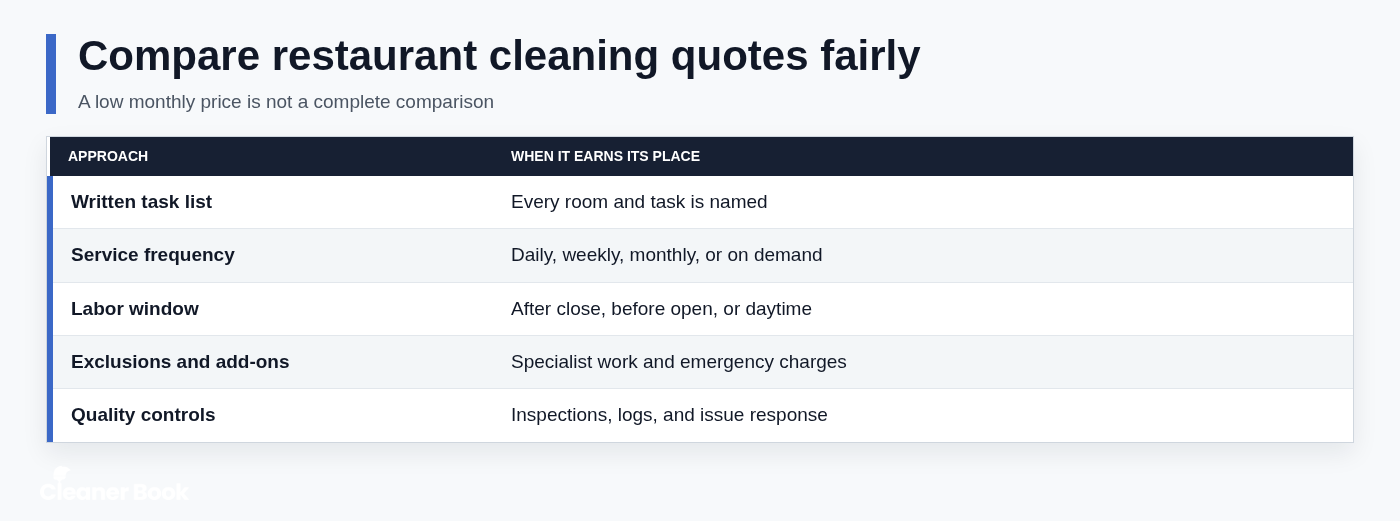
That is why the lowest monthly price is rarely the best comparison. Send each shortlisted provider the same written scope and ask them to quote against it. If one proposal includes nightly restroom service and another includes it only twice a week, the totals are not comparable.
- Compare the written task list first: Make sure every room and service task is named in each proposal. A cheaper quote may simply omit time-consuming work.
- Compare frequency and labor window: Check whether work is daily, weekly, monthly, or on demand, and whether it occurs after close, before open, or during business hours. Timing can materially affect staffing needs and cost.
- Identify exclusions and add-ons: Ask about consumables, emergency calls, floor restoration, equipment interiors, hood work, grease traps, windows, exterior cleanup, and special-event cleaning. These items can change the real annual cost.
- Review quality controls: Ask whether the price includes inspections, task logs, a supervisor visit, or a process for correcting missed work. Quality assurance should not be an undefined extra.
7. Review the Contract for Commercial Cleaning Services Before Signing
A quote explains the price; the agreement should explain how the relationship works when operations change, tasks are missed, or extra work is requested. Read both documents together.
- Confirm the term and renewal rules: Check the initial contract period, automatic renewal language, cancellation notice, and any early termination provisions. Avoid discovering a long notice requirement only after you need to change providers.
- Lock down service days and make-up visits: State scheduled service days, holiday arrangements, and what happens if a visit is missed. A missed cleaning before a busy shift should have a clear response process.
- Attach the detailed scope of work: Incorporate the final task list, service schedule, and approved quote into the agreement. Separate, unsigned documents create room for confusion later.
- Clarify pricing changes: Identify how and when prices can change, whether increases require notice, and how approved additions are billed. This is especially important for ongoing supplies and periodic work.
- Set access and damage-reporting responsibilities: Document keys, alarm codes, restricted areas, lock-up procedures, and how accidental damage is reported. Treat these as operating procedures, not casual instructions.
- Require approval for extra charges: Establish who can authorize additional work and whether approval must be written. This protects both the restaurant and the provider from surprises.
Contract clauses that protect day-to-day operations
The best contract terms are practical rather than dramatic. They establish what happens on an ordinary difficult night: a missed task, a spill, an inaccessible room, a supply shortage, or a change in service needs.
- Include inspection and correction procedures: State how quality is checked and the expected response time for missed or deficient work. This helps managers report problems consistently instead of relying on informal complaints.
- Name points of contact: Identify the restaurant contact, provider supervisor, and urgent after-hours contact. Clear ownership speeds up decisions when something needs attention.
- Use a change-order process: Additions such as patio cleaning, an extra event cleanup, or a new storage area should be documented before billing. A simple written approval process protects the working relationship.
- Document completed service: Decide whether completion is recorded through logs, checklists, manager sign-off, or another agreed method. The record should be simple enough to use consistently.
For agreements that are material to your business, have appropriate legal or procurement support review the terms before signing.
8. Set Service Standards Before the First Cleaning
Even a detailed contract needs an operational handoff. Use the first walkthrough to turn the written scope into shared expectations for the crew and restaurant managers.
- Conduct a joint pre-service walkthrough: Walk every included area with the provider, point out priorities, and identify access limits. This reduces the risk that the crew inherits assumptions instead of instructions.
- Record baseline conditions where useful: Photograph existing stains, damage, worn flooring, or buildup before service starts. This helps distinguish pre-existing conditions from new issues and gives both parties a realistic starting point.
- Define ready-for-service standards: Agree on what "clean," "sanitized where required," and "ready for service" mean for your restaurant. For example, restroom readiness may include stocked dispensers, dry floors, empty bins, and odor control.
- Create an issue-reporting channel: Give the crew a reliable way to report maintenance concerns, supply shortages, pest evidence, spills, or areas they could not access. Decide who receives those reports and how quickly.
- Use manager sign-off early on: During the first few weeks, use a simple inspection or sign-off routine to catch gaps quickly. Once standards are stable, move to a review cadence the team can sustain.
9. Use a Local Search Process That Produces Better Shortlists
Searching for "commercial cleaning services near me" is a useful starting point, but proximity alone does not establish restaurant experience. A nearby provider still needs to understand after-hours access, grease-prone floors, restroom frequency, guest-facing standards, and the difference between routine work and specialist services.
- Search locally, then screen for relevant experience: Ask whether the provider has worked in restaurants or comparable high-traffic food-service settings. Look for concrete answers about scheduling, task scope, and crew supervision.
- Shortlist providers that will inspect the site: A site visit shows that the provider is pricing your actual layout and condition rather than offering a generic package.
- Send every candidate the same scope checklist: Use one written brief for all providers. Comparable inputs produce more meaningful proposals and reveal which companies ask useful follow-up questions.
- Contact more than one local provider: A small, focused shortlist gives you options without creating an unmanageable vendor search. Compare clarity and operational fit, not just price.
CleanerBook
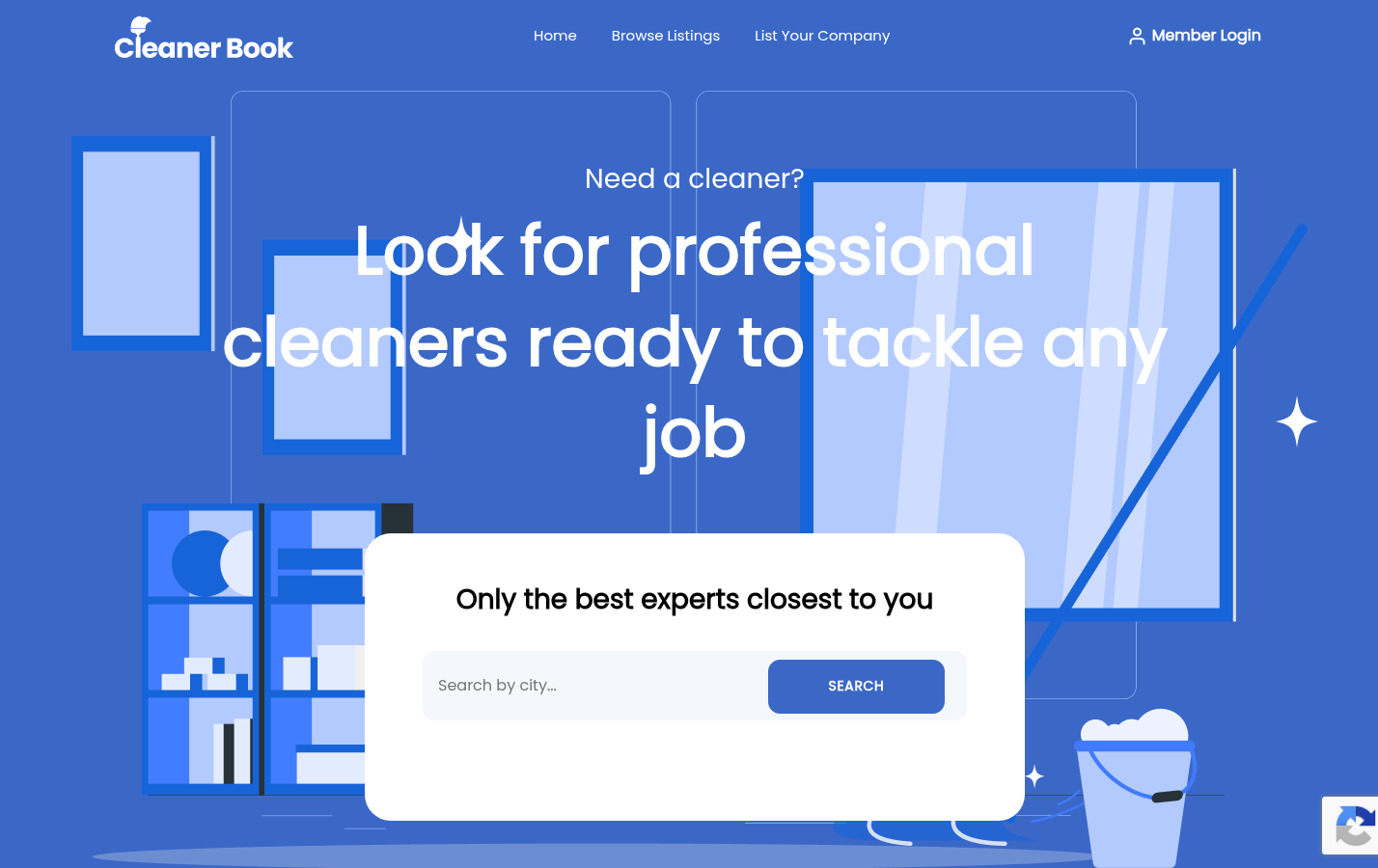
CleanerBook is useful for the first step of a local provider search: finding cleaning businesses by city and accessing the contact details needed to start a conversation. It can help restaurant operators build a local shortlist without relying only on a general web search.
The directory is a discovery tool, not a substitute for vetting. Confirm restaurant-relevant experience, insurance, training, scope, availability, and qualifications for any specialist work directly with each provider before hiring.
10. Run a 30-Day Quality Check After Hiring
The first month tells you whether the provider can consistently meet the agreed scope under real operating conditions. Review performance before small misses become accepted habits.
- Track missed-task patterns: Note recurring omissions by area, day, or shift rather than treating every issue as isolated. Patterns may point to an unrealistic schedule, unclear instructions, or weak supervision.
- Inspect the conditions guests and staff notice first: Review restroom readiness, odors, floor condition, entryways, high-touch surfaces, and dining areas. These are the fastest indicators of whether cleaning standards are holding.
- Check back-of-house problem areas: Review floor edges, drains, dish stations, waste zones, and grease-prone surfaces against the agreed frequency. Do not wait for buildup to become severe before raising it.
- Measure communication speed: Evaluate how quickly the provider responds to supply gaps, access problems, missed visits, and urgent cleanup needs. Good service includes reliable communication, not only completed tasks.
- Compare results with the signed scope: Judge performance against the contract instead of adding informal expectations without documentation. If you need more work, update the scope and pricing through an agreed change process.
- Adjust before renewal: Use the review to change frequencies, add periodic deep cleaning, correct performance issues, or revisit exclusions. Early adjustments are easier than carrying a poor-fit contract into another term.
Restaurant Cleaning Provider Checklist: The Essential Shortlist
Before selecting a restaurant cleaning provider, make sure you can check every essential item below.
- Written area-by-area scope: Every included room, surface, task, frequency, and supply responsibility is documented.
- Routine and specialist work separated: Daily janitorial duties, deep cleaning, and technical or compliance-related services are not blended into vague promises.
- Food-safety controls confirmed: The provider can explain tool separation, chemical handling, staff training, and issue escalation.
- Restaurant-compatible hours: Service windows, access rules, staffing coverage, and urgent-response expectations fit your operation.
- Insurance and training verified: You have requested appropriate coverage information and confirmed qualifications for the work involved.
- Comparable quotes reviewed: Every provider priced the same written scope, with exclusions and add-ons clearly identified.
- Contract protections in place: The agreement addresses service days, missed visits, pricing changes, access, documentation, and extra-work approval.
- 30-day review scheduled: Managers know how to inspect work, report issues, and adjust the service before renewal.
Use CleanerBook to find local cleaning providers, then send each shortlisted company the same restaurant-specific scope. That one step makes your conversations more focused and your final decision far easier to defend.